Secondary 1 Science introduces students to a much wider academic scope. Organised around four thematic strands: Diversity, Models, Interactions, and Systems. These themes cover areas like elements and compounds, the human digestive system, kinetic particle theory and the ray model of light, all within the same year.
This is a key year because it shapes how students approach Science for the rest of secondary school. Gaps left unaddressed in Secondary 1 compound quickly, affecting how students approach more advanced topics in the years ahead.
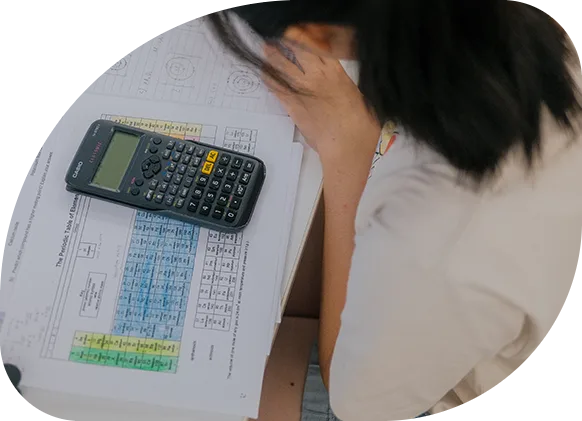
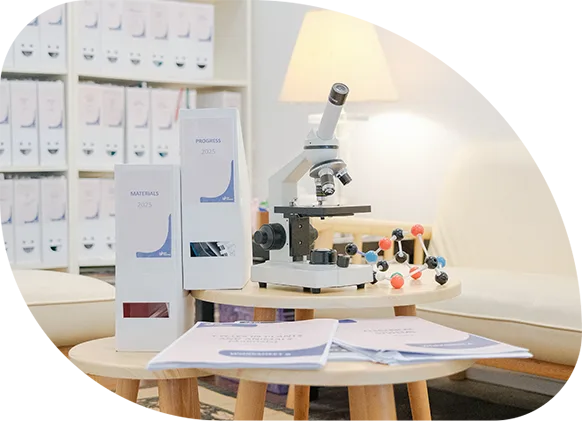
Every student begins with a diagnostic assessment that identifies their specific knowledge gaps. Lessons are then guided by our Meta-Cognitive Learning Approach, which teaches students how to process concepts, interpret questions, and form well-reasoned responses.
Students in our Secondary 1 Science programme learn to:
Science in primary school often focuses on observation and description. In Secondary 1, students are expected to explain concepts, connect ideas across Biology, Chemistry, and Physics, and express answers using proper scientific terms. This shift can feel sudden, especially when school lessons move quickly across several topics in one year.
Secondary Science requires students to use subject-specific terms clearly. Even when they understand the concept, marks can be lost when answers are too vague, incomplete, or missing the right scientific phrasing.
Topics such as cell structure, forces, and light require students to reason about processes they cannot always see directly. Without a clear explanation, these topics can be hard to apply.
Some students enter Secondary 1 using the same study habits that worked in primary school. However, memorised answers are often not enough when questions require explanation, comparison, data reading, or concept application.
Addressed early, with the right guidance, these issues can be managed, and that is where Sec 1 science tuition makes a real difference.
At TLS Tutorials, our Metacognitive Learning Approach helps Secondary 1 Science students think clearly under pressure, understand their own reasoning, recognise where it breaks down, and apply the right strategy before committing to an answer.

Students organise key Science concepts, definitions, and examples into clear mental categories. This helps them retrieve the right information more easily when answering questions across Biology, Chemistry, and Physics topics.
Students learn to identify the concept being tested, assess the information given, and determine the specific type of response required before attempting an answer.
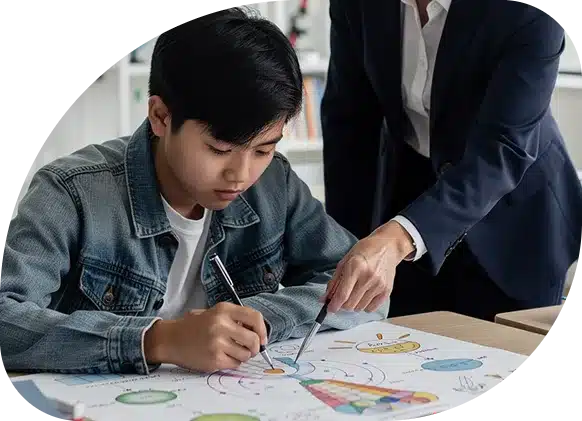
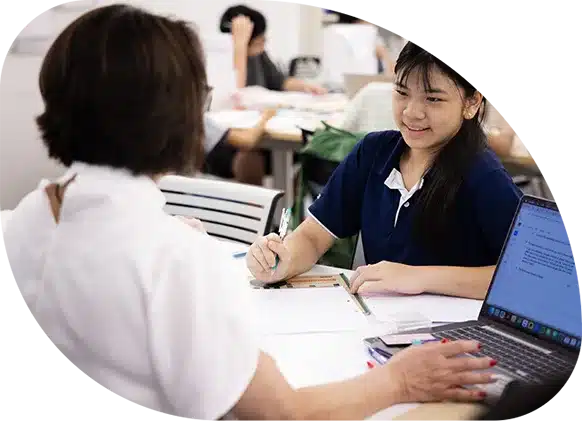
Secondary 1 Students learn to construct structured, complete responses that demonstrate their understanding. Practising within realistic timed conditions, they also develop the exam efficiency needed to manage a full Science paper without sacrificing accuracy for speed.
Our Secondary 1 Science tuition helps students strengthen concept understanding while preparing them for school-based assessments throughout the year.
Focus Area | How We Develop It |
|---|---|
Skills We Develop | Students learn to understand scientific terms, explain processes, interpret diagrams, compare concepts, and answer open-ended questions with clear reasoning. They also practise linking ideas across different Science topics. |
How Lessons Are Run | Lessons combine concept explanation, guided questioning, visual notes, mind maps, and written practice. Our educators review how students think through each answer, not just whether the final response is correct. |
Examination Alignment | Lessons follow the MOE Lower Secondary Science syllabus and are planned around common school assessment formats, including Weighted Assessments and End-of-Year Examination requirements. |
Discover how our secondary 1 Science students are gaining confidence, mastering concepts, and achieving impressive results through our tuition classes.
Trustindex verifies that the original source of the review is Google. I joined TLS quite late in the school year. Roughly around 5 months before my O level exams. At first, I was only doing physics with Mrs Esther, however, after 2 weeks with her, I had made the decision to do chemistry lessons with TLS as well. When I first went in, I was very worried because my chemistry and my physics were sub-par at best and was nervous that I wouldn’t be able to learn and prepare all I would need in time for my o levels. I was wrong. Firstly, the environment that TLS creates for students to work is amazing. It’s calm, quiet and allows us to easily focus on whatever we are doing. Moreover, the teachers at TLS are exceptionally nice and supportive people that give you the time patience and understanding that you need. Secondly, to do with the tutorials itself, not only are the tutors very kind, but they are very thorough and extensive in helping us understand what we are lacking and what we require help with. Their materials are amazing and they also made a very enjoyable experience to simply be in the classroom and learn. Besides academics however, TLS also does a wonderful job at ensuring we stay organised and on top of our work, with a comprehensive study plan as well as many files and binders to neatly keep or work in. I saw that this truly helped my studying and my academics as generally, I am a very messy and disorganised person. Overall, TLS has been able to help me in multiple ways. Within the span of four months, I was able to catch up on everything I was missing, they helped me start scoring better gradually as I continued to do mock test papers, and with their help, I was able to stay on top of everything with wonderful organisation and amazing planning done by the admin team. The centre is filled with amazing teachers, with their teaching being top-notch and their kindness and care for our well being also being a priority to them. Thanks to TLS, my physics and chemistry grades rose from a D7 and F9 in prelims to an A2 and B3 in the o levels, respectively. My sincere thank you to the entire TLS team and a special thank you to Mrs Esther for her dedication and support for my o levels.Trustindex verifies that the original source of the review is Google. amazing tuition centre with perfect vibes and an amazing awesome teacher who coached me in amathTrustindex verifies that the original source of the review is Google. Ms Winnie is a nice and understanding teacherTrustindex verifies that the original source of the review is Google. Started here in P4 Math, grade has remained consistent at A*. Continued with TLS academy until sec 4 . O Level A Math grade was A1. Teachers here are kind and understanding, they are adaptable and are able to adapt their teaching style to help me with understanding content. Would highly recommend people to join their classes.Trustindex verifies that the original source of the review is Google. My P6 daughter started math tuition at TLS this year and enjoys coming to class each week. She says this is her favourite tuition class. Ms Esther and Abel have periodically run diagnostics tests on her math abilities which really help in identifying the areas where she needs to work on. I see her math grades improving and am hopeful she will do well in the PSLE.Trustindex verifies that the original source of the review is Google. Mrs Esther is extremely patient and caring, I went from a 46% to a 87% in less than 5 months! The centre is very accommodating and I would highly recommendTrustindex verifies that the original source of the review is Google. My daughter enjoys her lessons at TLS Tutorials which is specifically tailored to her syllabus based on her needs by Teacher Esther. The class is small, personable and conducive for learning and interaction with the teacher. The learning experience coupled with the very warm and supportive TLS team make us feel welcome right from the start !Trustindex verifies that the original source of the review is Google. good tutors that teach well 👍🏻Trustindex verifies that the original source of the review is Google. I couldn’t recommend them more highly. Most tuition centres are about revision, homework and test preparation TLS does that and more; they have monthly diagnostics test and check ins with the parents which is helpful for us to understand our children’s progress. Most importantly through these interactions, you feel they truly have the heart for your kids not just academically but also for their well being !Trustindex verifies that the original source of the review is Google. We've seen a complete transformation in our daughters' attitude towards Maths since they started tuition here! They now look forward to their Maths lessons, which is a testament to the engaging and effective teaching methods used. We're grateful for Ms Giana's dedication and passion for teaching Maths and Abel's passion for caring for the students. Highly recommend!
At TLS Tutorials, we equip Secondary 1 students with the knowledge, skills, and curiosity needed to excel in Science and build a strong foundation for future studies.
Small classes allow our educators to observe each student closely, address doubts during lessons, and give more direct guidance.
Our educators guide students across Biology, Chemistry, and Physics concepts, helping them understand each topic with clearer explanations and close support.
Lessons follow the MOE Lower Secondary Science syllabus, ensuring students learn the right content at the right stage of the academic year.
The thinking habits developed in Secondary 1 support later learning in Sec 2, Sec 3, and O-Level Science subjects.
Rather than drilling students on model answers, we train them to think like scientists, to identify what a question is really asking, recall the right concept, and construct a well-reasoned response.
Lesson duration: 2 hours (including 10-minute break)
Class size: 1-4 students
Our Secondary 1 Science programme covers both G1 and G2/G3 curricula, with topics organised by term to mirror the MOE syllabus sequence.
Machines Around Us (I)
Our Environment
Our Body and Health (I)
Diversity
Interactions
Models
Systems
At TLS Tutorials, topics are sequenced intentionally, starting with measurement and investigation skills that underpin everything that follows, then building outwards from the properties of matter to living systems and physical forces.
Each 2-hour session is designed to build understanding, close gaps, and develop lasting scientific thinking.
Every student begins with an initial diagnostic assessment reviewed by our in-house diagnostic analyst and educator. This helps us identify topic gaps, answering habits, and areas that require closer guidance before lessons are planned.
Our educators explain core Science ideas using notes, diagrams, mind maps, and memory tools. Students learn how to group related concepts, connect ideas, and retrieve information more effectively during assessments.
Students work through selected questions that match the lesson focus. Our educators guide them to identify what is being tested, choose the relevant concept, and structure their answers properly.
With a maximum of four students per class, each child has room to ask questions. Our educators use discussion to surface misconceptions and strengthen understanding during the lesson.
After each lesson, parents receive feedback and study plan updates through a dedicated WhatsApp group. This gives parents visibility on what was covered, what improved, and what needs attention next.
Formal diagnostic reports are prepared twice a year to review topic understanding, answering techniques, and assessment readiness. These reports help guide the next stage of your child’s learning plan.
Ready to see the difference for yourself? Experience our teaching approach firsthand.
By the end of the secondary 1 Science curriculum, students will gain essential knowledge and thinking skills that extend beyond exams into real-world applications.
Our secondary 1 Science tuition focuses on building a solid understanding of core scientific concepts across Biology, Chemistry, and Physics. Students learn about key topics such as cells, the human body, matter, energy, forces, and ecosystems, ensuring they have a clear grasp of fundamental principles that will support future learning.
Students are guided to think analytically and approach scientific problems methodically. Through interactive exercises, experiments, and real-world applications, they learn to interpret data, make predictions, and solve problems logically, skills that are essential for success in upper-secondary Science and O-Level examinations.
Beyond academics, our tuition nurtures curiosity and a love for learning. By making secondary 1 Science lessons engaging, relevant, and hands-on, students gain confidence in applying scientific knowledge, participate actively in discussions, and develop a positive attitude toward the subject that will motivate them throughout their academic journey.
Monday – Friday
10AM – 7PM
Saturday
9AM – 6PM
Closed on Sundays and Public Holidays
Explore key concepts, strengthen your understanding, and thrive in secondary 1 Science with confidence.
All lessons are conducted on-site at our centre near Newton MRT. Each session runs for two hours, including a short break and is held four times per month.
Secondary 1 Science is assessed through a combination of Weighted Assessments (WAs) spread across Terms 1, 2, and 3, followed by an End-of-Year Examination in Term 4. At TLS Tutorials, our academic plans are synced with your child's school assessment timeline so they are consistently prepared, not just for the year-end paper but for every WA along the way.
Currently, all lessons are conducted on-site. For enquiries about scheduling or accessibility, contact us at +65 8803 6858 or [email protected].
Yes. All trial lessons are complimentary and run for the full two-hour duration of a standard session.

TLS Tutorials is an MOE-registered tuition centre in Singapore providing Math & Science programmes for Primary and Secondary school students. Located near Newton MRT, we offer a supportive learning environment.
10 Winstedt Road, Block A #02-04 / #02-08
Singapore 227977
Subscribe
Subscribe to our newsletter to get updated on the latest resources, news and promotion.
© 2026 TLS Tutorial Centre Pte. Ltd.