

2026 Math Syllabus: How to Master PSLE Algebra Questions and Simple Linear Equations
- 7 min read
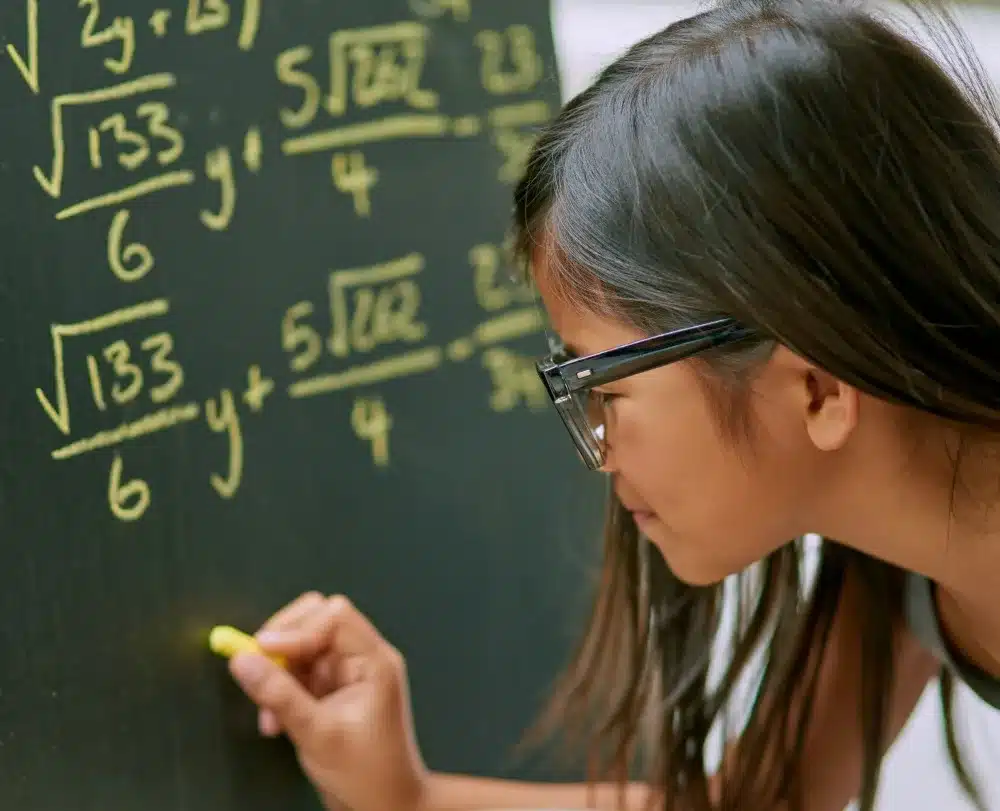
Algebra has been part of the P6 Maths syllabus for a number of years, but the updated syllabus introduces something that students have not been tested on before: simple linear equations.
Until now, P6 algebra covered forming expressions, identifying like terms, and evaluating by substitution. The new syllabus changes, however, go further, requiring students to solve equations and find the value of an unknown by working systematically rather than by guessing. That is what is expected for algebra alone, and it sits alongside a wider reshuffle of P6 Maths topics, with ratio and average moving up from Primary 5. If you have looked over your child’s recent worksheets and noticed more complex equations to be balanced rather than just expressions to be simplified, this is why.
Because this is the first cohort to face equation-solving at the PSLE, there are no past-year papers that cover it exactly, which is part of why it is the aspect of algebra that worries parents most this year. But the good news is that knowing what those PSLE algebra questions look like makes it far less daunting.
The New Frontier: Simple Linear Equations in the P6 Curriculum
The algebra your child has been doing up to now, forming expressions, simplifying like terms, solving one-step and two-step equations, and substituting values, was already part of the curriculum. What the revised syllabus adds is the requirement to solve equations: to isolate an unknown and find its value.
The MOE introduced this to ease the jump to Secondary 1, where equation-solving underpins almost every topic. The aim is for students to enter Secondary School already used to handling equations, rather than seeing one for the first time at thirteen.
Adjusting Your Child’s Maths Preparation
Knowing the scope is one thing. Helping your child prepare for it means changing how they approach a Math question. Many children try to solve algebra the way they solve arithmetic, by trial and error, testing values until one fits. That approach works on a few simple questions, then falls apart on anything harder. The skill to build instead is the systematic method of balancing an equation and working towards the unknown.
Accuracy also carries more weight than it used to. In the revised PSLE Math format, Paper 1 and Paper 2 now carry equal weight at 50 marks each. Within Paper 1, Booklet B has been streamlined: the five 1-mark short-answer questions have been removed, leaving 12 questions that are all worth 2 marks. With no easy marks to fall back on in that booklet, a careless slip in simplifying an expression costs more than it would have before.
How Does Algebra Fit Into PSLE Mathematics?
Algebra rarely turns up as a standalone question in the PSLE. More often, it sits inside word problems that also involve ratios or percentages, so your child cannot revise it once and then set it aside. What the paper is really checking is whether a student knows why a letter stands for a quantity. A child who grasps that can work through a question worded in a way they have not seen before. A child who has only memorised a sequence of steps, however, might freeze the moment it is rephrased.
The Core Algebra Concepts for 2026 Success
Three skills form the very basis of everything your child will be asked to do with algebra.
1. Writing and Simplifying Expressions
The starting point is turning ordinary English into mathematical form. If a toy costs $x and a bag costs $15, then 4 toys and 2 bags come to 4x + 30. The letter holds the place of an amount that has not been worked out yet, and everything else behaves like normal arithmetic.
Simplifying then comes down to spotting like terms. 5a and 2a can be combined into 7a because both refer to the same unknown, while 5a and 2b cannot, because a and b stand for different quantities. Children who miss this tend to add everything together regardless.
2. Keeping an Equation Balanced
Solving an equation rests on one principle: balance.
Whatever you do to one side of the equals sign, you must do to the other.
So if 3x = 15, dividing both sides by 3 keeps the equation balanced and leaves x = 5. Once a child holds on to that one rule, two-step equations become the same idea applied twice, rather than something new to learn.
3. Turning Word Problems Into Equations
Word problems ask your child to define a variable and then come up with an equation from the relationships described. Take a question that says a comic book costs $6 more than a magazine.
If the magazine costs m dollars, the comic book costs m + 6. The numbers here are easy. The real work is reading “six more than” correctly and writing m + 6 rather than 6m.
Where Do Students Struggle Most with Algebra?
A few specific difficulties show up again and again once algebra is introduced:
- The Abstract Nature of x: Moving from concrete numbers to letters feels strange to a child who has spent five years working only with figures.
- The Label Trap: Students read x as a label, like a unit or a name, rather than as a quantity that can be operated on.
- Misread Relationships: Confusing “three more than n” (n + 3) with “three times n” (3n) is among the most common errors, and it usually comes from rushing the reading, not from weak maths.
Almost every child encounters these in the first few weeks of algebra. They ease once the idea of a variable settles in, which is why the most useful thing you can do at home is help that idea land clearly, rather than pile on extra practice.
How to Support Your Child Through Algebra
None of this calls for you to be a Maths expert. A few simple changes to how algebra is practised at home tend to help the most.
1. Using Visual Aids and Models
Algebra becomes easier to grasp when it is made visual before it is made abstract. Algebra tiles, where squares and rectangles represent constants and variables, let a student see what combining like terms looks like. The bar model your child already knows can serve as a stepping stone too: draw the bar model first, then write the matching equation underneath it.
2. Linking Algebra to Everyday Situations
Algebra makes more sense to most children when it connects to something they already do. Ask your child to write the cost of n items at the supermarket, or to use a variable to work out how much flour a recipe needs if the batch is doubled. Examples like these tie the symbols to situations they recognise, which takes some of the strangeness out of the formal questions.
3. Building Up Practice Gradually
Practice works best when it is scaffolded. Start with one-step equations such as x + 2 = 10 before moving on to two-step equations like 3x – 4 = 11. When your child gets one wrong, resist the urge to simply correct it. Ask them to talk through their reasoning out loud instead. Finding the exact point where the logic broke down teaches far more than redoing the question with the answer already in front of them. It is the same principle our educators work from: the mistake itself is the most useful thing in the room.
P6 Algebra Questions Worth Practising
The examples below show the kinds of algebra questions your child might face, along with the working each one requires.
Question 1: Simplify the Expression
Question: Simplify 12 + 8k – 5 + 3k
- Step 1, group the like terms: (12 – 5) + (8k + 3k)
- Step 2, simplify the result: 7 + 11k
Answer: 7 + 11k
Question 2: Write an Algebraic Expression
Question: Sarah is 14 years old. She is p years older than her younger brother, Leo. Write Leo’s age as an algebraic expression.
- Sarah is the older sibling, so Leo’s age is Sarah’s age minus the gap between them.
- That gap is p, so Leo is 14 – p.
Answer: (14 – p) years
Question 3: Solve a Simple Linear Equation
Question: Solve 3x + 5 = 20
- Step 1, subtract 5 from both sides: 3x = 15
- Step 2, divide both sides by 3: x = 5
Answer: x = 5
Exam Tips for PSLE Algebra Questions
Beyond getting the method right, a few exam habits help your child hold on to the marks they have earned.
- Take Note of the Pre-Printed Units: In 2026, units such as cm, kg or $ are printed on the answer line, so make sure your final figure matches the unit the line asks for.
- Show Your Working in Paper 2: Marks are awarded for the method, not only the answer, so set out each step of isolating the unknown.
- Check that the Answer is Reasonable: An age that comes out negative, or as an awkward fraction, is a signal to recheck how the equation was set up.
How TLS Tutorials Prepares Your Child for Algebra
Algebra is the main new topic in this year’s P6 Maths, and it asks students to think in a way they have not had to before. Preparing for it well means catching the arithmetic-only habits early, while there is still time to change them.
At our Math tuition centre, classes are capped at four students, which gives our educators the room to notice when your child is leaning on trial and error rather than working through the algebra properly, and to step in. Our educators also know how the revised paper works and where algebra tends to appear across it, so the practice your child does matches the questions they will have to solve.
If you are looking for PSLE Math tuition designed around the 2026 changes, or weighing up Primary Math tuition in Singapore for your child, speak with us to find out how we can help close any learning gaps.