

Mastering the O-Level Physics Practical: A Complete Guide
- 30 September 2025
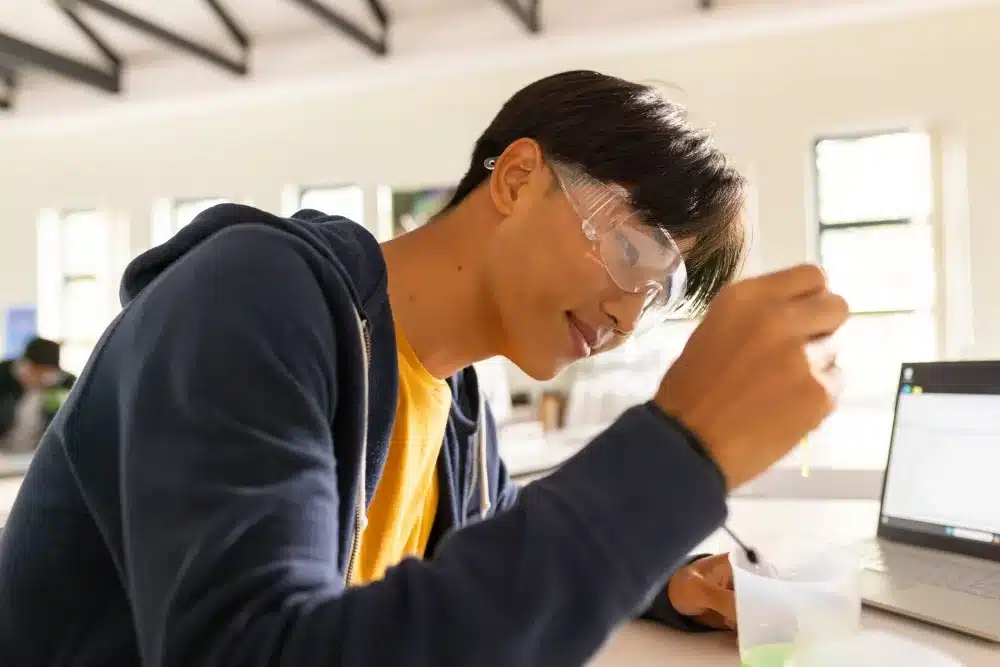
On 6 October 2025, Pure Physics students will face the practical component of their O-Level exam, a 1.5-hour session conducted across staggered shifts from 8:00am to 4:50pm. Unlike the written papers, this one demands quick thinking, steady hands, and the ability to apply concepts in real-time.
This means that there’s no room for guesswork. Students must be ready to handle unfamiliar setups, follow step-by-step procedures accurately, and present clear, logical data analysis under exam pressure. Because of this, for many, the stress isn’t just in the content, but in staying composed while navigating lab equipment and time constraints.
However, strong performance in the Physics Practical can come from steady exposure to lab work, familiarity with apparatus, and consistent practice in analysing data clearly and methodically.
A Closer Look at the Practical Exam Structure
Conducted under timed conditions, Physics Paper 3 challenges candidates to demonstrate experimental technique, observation accuracy, and data interpretation skills, all while working independently. This hands-on format tests both scientific thinking and steady execution, which are essential at the O-Level stage.
Exam Layout
The practical exam is divided into two sections. Section A is worth 20 marks and typically includes one to two experimental setups focusing on skills like data collection, use of apparatus, and observation. These exercises may involve familiar concepts but require close attention to procedural steps and results.
Section B, also carrying 20 marks, centres on a single extended experiment. Students may be asked to analyse variables, identify relationships, or apply planning skills to unfamiliar situations. This section often tests the ability to integrate knowledge across topics and respond with structured thinking.
Some tasks may include planning-based questions or data interpretation without actual lab work, depending on the exam year. Materials are assigned per question, and access to personal notes or textbooks is strictly not allowed.
Time Allotment
Each student will be given a total of 1 hour and 50 minutes to complete the Physics Practical paper, divided evenly between the two main sections (each with a duration of 55 minutes). This timing includes hands-on work, data collection, and written responses, which must be completed within the designated duration for each experiment. Once a section ends, you won’t be allowed to return to it, so time management becomes part of the challenge.
Categories of Experiments
The practical tasks will generally fall into core Physics themes. Students can expect setups involving measurements with vernier calipers, basic electricity circuits, thermal investigations, and mechanical systems like levers. These experiments are designed to test accuracy, understanding, and the ability to follow scientific procedures closely. Even though the apparatus may differ year to year, the underlying concepts tend to revolve around standard syllabus topics.
How You’re Evaluated
You’ll be assessed across four core skill areas: planning, manipulation and observation, data presentation, and analysis. That means being able to set up the apparatus correctly, take reliable measurements, and record observations clearly.
You’ll also need to interpret results and suggest how the experiment could be improved or made safer. Accuracy counts, but so does process, so every decision, from decimal places to graphing conventions, should reflect careful reasoning.
Lab Safety and Methodical Process
Each experiment begins the moment you walk into the lab. You’ll need to demonstrate that you can handle equipment responsibly, follow written instructions without shortcuts, and conduct experiments in a clean, organised manner. Examiners will be watching for consistency in setup, confident handling of tools, and whether your steps show a logical, controlled approach from start to finish.
Reporting and Analysis
After completing the hands-on portion, you’ll shift gears into making sense of what you’ve gathered. This part of the assessment checks how well you interpret numerical data, spot trends, and support your conclusions using evidence from the experiment. You might be asked to perform calculations, sketch graphs, or explain the link between observed results and physical principles. Precision matters, but so does showing that you understand the ‘why’ behind your findings.
The Impact of Your Practical Grade
Scoring well in the Practical Paper can make a noticeable difference to your final O-Level Physics grade. Since Paper 3 accounts for 20% of the total score, it holds enough weight to pull your overall grade up or down. Even if you’re confident with theory, underperforming here could leave a dent in your results. On the flip side, a steady and well-prepared performance in this paper can give your grade a push.
Effective Strategies for Practical Success
Tackling the Physics practical exam with confidence starts well before you step into the lab. Here’s how you can strengthen your approach:
1. Build a Solid Conceptual Foundation
Whether you’re calculating energy transfer or working with levers, a strong grasp of core Physics principles like forces, heat capacity, and electrical circuits lets you connect procedures with outcomes.
For instance, when dealing with heat experiments, knowing how mass and specific heat capacity affect thermal equilibrium can help you interpret results more precisely. Always link concepts to the physical quantities they represent and stay consistent with units like newtons (N), joules (J), or ohms (Ω).
2. Connect Theory to Hands-On Skills
Knowing your concepts is one thing, but being able to apply them is another. This is where consistent lab practice makes a difference.
Familiarity with apparatus, measurement tools, and experiment setups gives you a clear advantage during the exam since it will help you move with purpose, instead of second-guessing what comes next. For example, understanding how resistance changes in a circuit is far more intuitive when you’ve physically adjusted wire lengths or swapped out resistors.
Beyond just performing tasks, practical sessions also sharpen your ability to plan procedures, interpret results, and avoid missteps like parallax errors or incorrect unit conversions. Over time, you’ll build both speed and accuracy by linking the why behind a concept with the how of execution.
3. Use Visual Aids for Problem-Solving
A well-drawn diagram can do what a paragraph of explanation cannot. Whether you’re figuring out moments in a beam or tracking motion along a slope, sketching it out helps you break the problem into manageable parts. It also reinforces your understanding of what’s really happening in the setup.
Visuals also come in handy when you’re planning your approach. Drawing arrows to represent forces or labelling key components can highlight relationships between variables and help prevent simple mistakes. During the exam, this habit shows the examiner your thought process, and even if your calculations go off track, a clear diagram might still earn you some marks.
4. Master Data and Graphing Skills
Start by presenting your data in a well-labelled table using correct units. When plotting a graph, think through your choice of scale so that points are spread out neatly across the grid. Use sharp pencils, mark each point clearly with an ‘x’, and label your axes with the correct quantity and unit in brackets. Also be sure to understand which variable belongs on each axis: the independent one goes on the x-axis, the dependent on the y.
Key Experiments You Should Practice
These common experimental setups appear regularly across papers, and getting comfortable with them will give you an edge.
I. General Physics Investigations
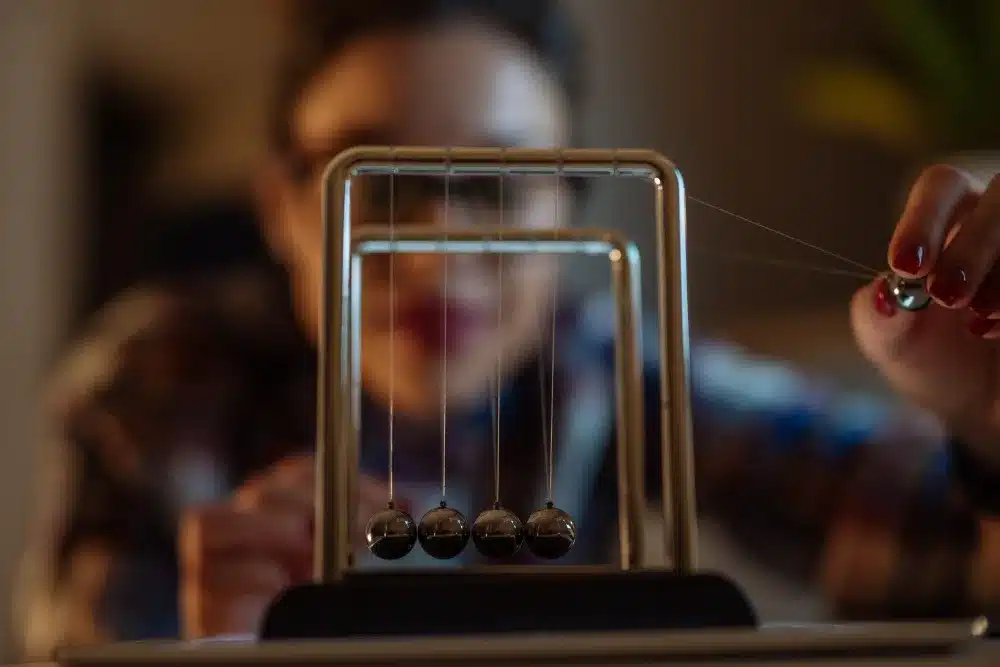
This category covers foundational experiments that train you to apply formulas, use measuring instruments, and understand patterns in physical systems.
Investigating the Period of a Pendulum
The pendulum experiment is a staple in practical assessments. You’ll need to measure how long it takes for one full swing, and more than once, to calculate an average period. The longer the string, the slower the swing. As you repeat the setup, ensure you’re releasing the pendulum gently from a small angle, not pushing it. Use a set square to make sure your measurements from the table to the bob are perpendicular. Watch out for friction at the pivot or inconsistent timing as they’ll throw your data off.
Analysing Spring Behaviour
This experiment demonstrates Hooke’s Law: stretch a spring with increasing weights and record how far it extends each time. It’s a great test of your data collection and graphing skills, especially when drawing a best-fit line.
Always subtract the spring’s original length to get the actual extension and make sure your ruler is vertical and your readings are taken at eye level to avoid parallax errors. Once you reach the spring’s elastic limit, your line will start to curve, so don’t overload it.
Exploring the Principle of Moments
You’ll be balancing a metre ruler on a pivot and hanging weights from different points to explore turning effects. If done well, your data will show how clockwise and anticlockwise moments balance each other out. While conducting the experiment, look out for any friction or unsteady pivots, and check your setup is truly horizontal before recording.
Determining Gravitational Acceleration
This setup usually involves dropping a small object from known heights and measuring the time taken to fall. Keep external forces like wind out of the equation and make sure your timing is consistent as reaction time errors can skew results. Run the drop multiple times, and use a table to track distances and times side-by-side.
Whether it’s a ball bearing, pendulum, or another variant, the goal is the same: show that you can apply a derived formula from real-world data.
II. Thermal Physics Investigations
Thermal physics often catches students off guard because the data collected can be unpredictable. These experiments test your ability to work methodically, use formulas precisely, and account for real-world variables like heat loss and delayed thermometer response.
Measuring Specific Heat Capacity
This setup usually involves heating a known mass of a material and measuring the temperature change over time. You’ll use a joulemeter or an electric heater connected to a power supply, and a thermometer or temperature probe to track the rise in temperature.
But that rise alone doesn’t tell the full story.
To calculate the energy absorbed, you’ll also need the material’s mass and specific heat capacity. Minimise heat loss by insulating your setup, and ensure your readings are consistent before calculating. If your final value seems off, retrace your steps, especially your unit conversions.
III. Wave Investigations
Whether you’re working with light, water, or lenses, consistent alignment, accurate tracing, and clear data presentation make or break your answer.
Studying Water Waves
In this experiment, the goal is to calculate wave speed using a ripple tank. Ripples are created across the water surface using a vibrating dipper or ruler, and students measure how far the wave crest travels over time. Keep the water level shallow and consistent throughout to avoid unnecessary variation in wave behaviour.
Time the crest, not the splash, and always start the stopwatch at the moment the ripple is formed. A light source under the ripple tank can help visualise the wave front clearly. Avoid turbulence by generating steady, smooth ripples, and take several runs to get an average value.
Using a Converging Lens
This experiment brings together measurement, light ray tracing, and the lens formula in one neat package. Place the object beyond the focal length of a convex lens, and adjust a screen until a sharp image forms. Once you’ve found that sweet spot, measure the object distance and image distance, and plug them into the lens equation.
Be meticulous with your alignment. This means that the object, lens, and screen must all sit on a straight line. Make sure the lens is clean and held upright, and take your measurements perpendicular to the bench. If your image is blurry or misplaced, it likely means something’s out of alignment or too close to the focal point. When done well, this experiment is a great opportunity to earn easy marks and show understanding through clean data and sharp observations.
Investigating Total Internal Reflection
This is a high-yield topic that often appears in optics questions. You’ll trace a light ray entering the flat face of a semi-circular block and gradually increase the angle of incidence to observe how it bends, then reflects entirely within the block. As you reach the critical angle, the refracted ray will travel along the boundary. Go beyond just spotting when reflection kicks in and take multiple measurements to calculate an average critical angle, then find the refractive index.
Angle measurements must be taken precisely, and the block should remain in the same position throughout to avoid skewed results. Beyond that, clean protractors, aligned ray boxes, and an eye directly over the baseline are what make the difference between a guess and an accurate calculation.
IV. Electricity and Magnetism Experiments
These topics often come with circuit diagrams and calculations, which means your answers need both technical accuracy and visual clarity.
Investigating Ohm’s Law
This experiment demonstrates the relationship between voltage and current across a resistor. By adjusting the resistance using a rheostat and recording values of voltage and current, you can verify Ohm’s Law.
The ammeter should be placed in series and the voltmeter in parallel across the resistor. If done correctly, your plotted graph should show a straight line through the origin. But be sure to watch out for heating in the resistor and remember to disconnect the power when idle to prevent circuit damage or injury.
Analysing a Resistance Wire
In this setup, students explore how different physical properties of a wire affect its resistance. A precise measurement of wire diameter is crucial in such experiments, so use a micrometre instead of estimating by eye. To minimise variables, keep the current low so the wire doesn’t heat up and skew the readings. Mark the measurement points clearly between the clips and make sure the wire is straight and untangled throughout the experiment.
Working with a Light Dependent Resistor (LDRs)
This task involves tracking how an LDR’s resistance shifts with light intensity. The circuit typically includes a fixed resistor and voltmeter to measure voltage across the LDR. As the light source is moved closer, resistance should drop, producing a downward curve on your graph. And since LDRs vary in responsiveness, allow time between measurements for values to stabilise before recording.
Exploring the Motor Effect
This experiment demonstrates how electrical energy can produce motion through the motor effect. When a current-carrying wire is placed within a magnetic field, a force is exerted on the wire, which can be predicted using Fleming’s Left-Hand Rule. Align the wire perpendicular to the magnetic field lines and observe the movement when the current flows.
The force depends on the current strength, magnetic field strength, and length of the wire segment. Stability is key here, so make sure the setup is secure and free from external magnetic interference for clean observations.
Final Preparation for Practical Excellence
As the exam nears, consistency in revision becomes just as crucial as understanding the concepts. The most effective way to sharpen your skills is by working through O-Level Physics practical past papers under timed conditions. This helps build familiarity with question types, improves time management, and trains you to present your answers clearly with accurate diagrams and logical explanations.
In class, don’t skip the hands-on opportunities. Use every lab session to fine-tune your technique, from adjusting circuits to reading instruments accurately. Clarify misconceptions with your teacher early, and review feedback carefully. If you’re still wondering how to do well in Physics Practical, it often comes down to developing these habits over time and not cramming the night before.
At TLS Tutorials, our O-Level Physics tuition programme is designed to support you through every stage of your exam prep. With small-group settings and targeted practice, we go beyond just theory. Rather, our Secondary School Science tuition classes ensure you’re confident in both written and practical components. Reach out to us to get the guidance and strategies you need to finish strong.