

Future JC Requirements: Understanding the Shift from L1R5 to L1R4
Resources Home Future JC Requirements: Understanding the Shift from L1R5…

We’ve all done it in our time—flipping through the Ten Year Series, circling tough questions, and checking answers at the back. For generations, past year papers have been the default go-to for exam prep. In fact, even our teachers swore by them. Our parents bought stacks of them. And now, with the PSLE on the horizon, many Primary 6 students are probably doing the same.
But as the curriculum evolves to better cater to students of different learning profiles, some parents have begun to ask: is this still the most effective approach? With shifts in exam formats and increased focus on application and reasoning, are past papers still relevant, or do they risk preparing students for a test that no longer exists?
So, what exactly are PSLE practice papers, and why do they matter so much?
Past year papers are collections of past year papers from actual PSLE exams, sometimes paired with mock papers crafted to mirror exam standards. Their primary purpose is to give Primary 6 students a realistic sense of the question types, level of difficulty, and format they’ll face in the real exam. When used strategically, these papers can help students sharpen their understanding, reduce exam anxiety, and boost performance through targeted revision.
You’ll find PSLE past year papers through a variety of sources, from your child’s school, local bookstores, online academic retailers, and even free digital repositories. Many assessment books even consolidate three to five years’ worth of questions, sometimes arranged by subject or topic.
However, a quick word of caution: if you’re downloading from online sources, always check that the papers align with the latest MOE syllabus to ensure relevance and accuracy.
While topic-by-topic revision builds foundational knowledge, practice papers simulate the full experience, challenging students to apply what they’ve learned across subjects, under time pressure, and without hints.
Here are six ways past year questions can make revision smarter, sharper, and more strategic:
One of the biggest benefits of working through entire papers is clarity, as it quickly shows students which areas they’re strong in and where more work is needed. By encountering a mix of topics in a single sitting, students are forced to switch gears and tackle a variety of question types. Over time, patterns begin to emerge. Some topics feel manageable, while others repeatedly trip them up.
This approach can be especially helpful when deciding how to divide revision time. Should you continue drilling topic-by-topic, or is it time to shift focus and apply knowledge across the board? Instead of guessing, let the papers guide you. Strategic revision means zeroing in on weaknesses, not spending equal time on everything.
For many Primary 6 students, facing their first national exam can feel overwhelming, not just because of the content, but also the unfamiliar format.
That’s where past PSLE papers come in.
They offer more than just questions; they provide students with a clearer picture of what the exam day will probably look and feel like.
By working through full papers, students begin to internalise the structure of the paper, the phrasing of questions, and the style of answers that examiners expect. This exposure gradually builds familiarity, reducing exam-day anxiety and building response confidence. Students also get to see how marks are allocated, which helps them understand where to spend more time and effort.
One of the smartest ways to study isn’t just about doing more.
Instead, it’s about doing what matters most. When students work through a few years’ worth of PSLE papers, patterns begin to show. Certain question types or concepts surface again and again, especially in subjects like Math and Science.
Spotting these commonly tested areas gives students a leg up as they will know which topics are more likely to appear, and can revise with greater purpose. Rather than guessing what to focus on, they can anchor their prep around questions that have stood the test of time. Practising these recurring question types also sharpens technique, which can lead to faster, more accurate answers under pressure. It’s a focused strategy that makes every revision session count.
The PSLE syllabus is broad, and there’s no denying that. With so many topics packed into each subject, it can be hard for students to know where to begin or how much time to dedicate to each area.
That’s where past year papers prove their value.
Instead of trying to master every single topic at once, students can start to prioritise based on real exam data—what’s been tested before, what tends to appear regularly, and where their confidence currently stands.
Plus, working through actual PSLE mock tests naturally directs attention to more important concepts. Often, students don’t realise there are subtle knowledge gaps until they’re faced with a question that trips them up. These small gaps, whether it’s a forgotten formula, a missed keyword, or a misunderstanding of phrasing, can cost valuable marks. By revisiting these pain points through targeted revision, students can strengthen their foundations without wasting energy on low-priority areas.
After working on each past year’s paper, students should take time to log their errors, rather than just moving on to the next one. Was it a careless mistake? A misread question? A concept that wasn’t understood properly?
By categorising each error by topic and cause, students (and parents or tutors) get a clearer picture of recurring issues. This transforms mistakes into learning tools. When done consistently, this process trains students to pause, reflect, and revise more purposefully, potentially boosting long-term retention and helping to prevent the same slip-ups in future assessments.
Even the most well-prepared student can lose marks if they run out of time. Practising with full-length past PSLE papers helps students build up the stamina and pacing needed to complete every question without rushing at the end. They learn to allocate time by section, move on when stuck, and circle back efficiently if time allows.
Over time, this repeated exposure trains students to think quickly and respond confidently under pressure. It also reduces the mental load on exam day, since they already know what to expect and how to pace themselves.
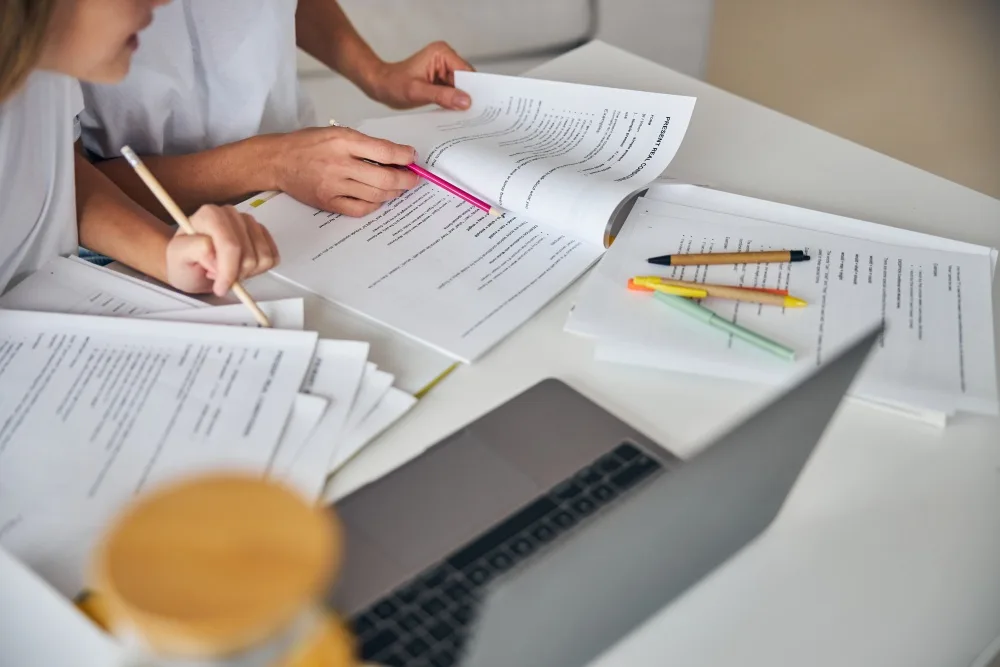
Having stacks of past papers is one thing—knowing how to use them effectively is another. The key lies in being strategic, not just repetitive.
Not every mistake means the same thing, and not every question needs the same amount of review. That’s where a simple colour-coding system can make a big difference.
After completing each paper, students can mark their responses with three colours: red for questions they couldn’t attempt, orange for those they got right but weren’t confident about, and green for questions they breezed through.
This visual cue acts as a progress tracker across multiple papers, helping students, and their parents or tutors, quickly identify where to focus their revision time. Over time, the goal is to convert as much red and orange into green as possible. Seeing that shift visually not only highlights academic improvement but also builds confidence ahead of exam day.
Mistakes are inevitable, but they’re also useful—if we take the time to unpack them. Keeping a running log of key errors allows students to identify recurring patterns that might otherwise go unnoticed. Categorise mistakes by subject and topic, and go one step further by tagging them with a root cause: was it a misread question, a careless slip, or a gap in understanding?
This method transforms every error into a teaching moment. Over time, it becomes easier to detect weak spots and avoid repeating the same mistakes. Whether recorded in a notebook, spreadsheet, or a shared Google Doc, this habit builds both awareness and accountability—and makes follow-up discussions with teachers or tutors much more productive.
Once students have gone through a few different past papers, as mentioned, certain types of questions start to stand out. Keeping a personal collection of these questions can be incredibly useful for targeted revision.
In addition, encourage students to look beyond just the topic. Note the phrasing of task words like “justify,” “describe,” or “compare.” Patterns in these command words can reveal where students struggle most, whether it’s with explaining clearly, reasoning logically, or managing multi-part questions. Repeating this process builds fluency and ensures students aren’t caught off guard by familiar question styles on exam day.
More isn’t always better, especially when students are already working on papers at school. Instead of piling on new ones, a better approach is to revisit the questions that tripped them up the first time. Re-attempting these builds confidence and reinforces learning far more effectively than jumping to new content.
You can make this easy by printing just the flagged questions from earlier attempts or using reusable answer sheets so the same questions can be tried again closer to the exam. Consider buying assessment books early in the year to avoid the last-minute rush, or use separate paper so students can work on the same problems multiple times without distractions from previous scribbles.
Doing well in the PSLE isn’t just about how much a student knows—it’s also about how they revise. With strategic practice using past year papers, students can identify their weaknesses, sharpen their answering techniques, and manage their time more efficiently during the actual exam.
Whether your child is gearing up for Science or needs extra support in areas like Primary 6 Maths, working through authentic exam papers builds confidence and fluency. Many parents often wonder if it’s better to revise by topic or dive into full-length practice. While both approaches have value, timed past papers simulate the exam experience in a way topical worksheets simply can’t.
Looking to reinforce core concepts with expert guidance? If you’re exploring Math tuition for Primary School students in Newton or Primary 6 Science tuition support in Singapore, our structured programmes can help. We also guide students on how to use and interpret previous PSLE papers, so every practice session is maximised for success.
Monday – Friday
10AM- 7PM
Saturday
9AM- 6PM
Closed on Sundays and Public Holidays
Resources Home Future JC Requirements: Understanding the Shift from L1R5…
Resources Home Mastering Secondary 2 Streaming: Your Path to O-Levels…
Resources Home Your O-Level Score Explained: How to Calculate Your…

TLS Tutorials is an MOE-registered tuition centre in Singapore providing Math & Science programmes for Primary and Secondary school students. Located near Newton MRT, we offer a supportive learning environment.
10 Winstedt Road, Block A #02-04 / #02-08
Singapore 227977
Subscribe
Subscribe to our newsletter to get updated on the latest resources, news and promotion.
© 2026 TLS Tutorial Centre Pte. Ltd.